Monday, October 20, 2025

The Spirit of Bounce


This post took - I kid you not -  almost a full month to write. I am actively trying to exercise those quick twitch creative muscles and get a heavier amount of writing and creating in versus all of my curios distractions, like learning Unity/Unreal Engine and exploring virtual movie experiences. I’m determined to finish this one because first of all, I had an original point, but also, I realize I’m still unpacking lots of emotions and detoxing. Writing always gives me the mental knolling that gives me perspective, further proof that I’m writing this mostly for myself. Twenty plus years of journal keeping taught me a lot. This is just the latest attempt to get back in rhythm.  

Let’s go back a month to the start of this: 

There seems to be two huge paths in the entertainment industry, one is a straight but extreme lane in which you pick one thing, rarely diverge from that goal, and spend every waking moment on that focus. That's  Kobe Bryant, Prince, Malala Yousafzai, and in my experience, the a cappella phenoms Pentatonix, Jason Derulo, my friend Drea Rose, and the incredible perseverance of Streetlight Cadence. Singular in purpose, unimpeachable work ethic, and an intense drought of distraction. I saw many of them at the beginning of their careers, nervous but undeterred by obstacles or a plan B, and say what you will about the way the rest of the country sees LA; There is a fight in the people of this town for the things we believe in that, against all odds, results in some beautiful art being made. None of these people ever worried about being famous.  Destiny seemed to be an undeniable thing in measure for all of them,  and we will look back at some point and know that it was almost prewritten to play out this way. 

The other path, the one I think most people take, is one of exploration and discovery, which means you're going to flat out meet not only resistance, you're going to meet rejection, that if you know how to use it as fuel, it will be a powerful form of redirection. For myself, I think I decided long ago that I wouldn't let loss or abandonment define me, but I'll be completely honest: For most of my adult life, I didn't have perspective on it. I have had chapters in my journey driven by self-doubt and self-rejection, and I was the worst and first critic that made major changes in my life. I have, in fact, completely abandoned the arts because I didn't credit myself with the talent to try. In high school, I was the musician. The rest of my group had the filmmaker, the actor, the comedian, and...I guess this makes sense, but the one who was the  Poli Sci major has had the most stable life and ended up as the most consistent friend. Okay, stable? Has anybody had a stable life in the past decade or so? I went into college as a music major and quit after two semesters because the hunger for understanding music theory was smothered by a lack of connection between the curriculum and passion for expression and performance. I dropped out altogether and got a corporate job. That was the first time I left it. 

Over the years, I have lived in very different worlds, mostly by chance and not by choice, slowly learning over time to look at the direction I was pulled or pushed in rather than the direction I came from. It's only at this later stage in life that I've begun to look back, and I'm super proud of my story. Looking at this  diorama from one angle in the simplest terms, I've been thrust out by layoffs, by one firing, by flashpoints of burnout, an aftermath of goodbyes scattered across a timeline that might not be compelling as a hero's story. Seeing this story from another angle, I built a thriving and active theater company. I grew an entertainment program in one of the busiest walking spaces in the city. I brought love, compassion, and understanding to a sacred space in downtown. All of these elements are things people previously brought to those areas, but I feel like I brought change to those spaces. I left them different than the way I found them, and I like to think I did it for the better. 

I didn't allow myself to be discarded, I looked for places to make an impact, and I found them. I've learned over time to be thankful for the people who let me go or understood when I had to leave - even the one who fired me for whatever his reasons were - as all were catalysts for change in my life, not completely unlike that college girlfriend who once said that if she stayed with me she knew I'd dedicate everything to her and family, but she didn't want to be the one who would prevent all of the things she thought I'd do someday. I am positive she could not have predicted the actual outcome, much less my outlook on life right now. There's no panic, just gratitude, no nostalgia, only belief that I'm going to find something to be fascinated with and an irrational thought that I was not made to blend in. The fire is still burning, as I tell my friends when it comes to describing my outlook on career and art. 

But let's be absolutely real. Rejection is rejection. There's no way to put a bow on it. People will plot against, covet your attention or successes, downplay your skills or talent, make things unusually difficult for you to function, breathe, or thrive. The shock of change will wear off and evolve into a new reality quickly, but how do you deal with the people who root for your failures, make deliberate moves to hurt you, the ones who look for you to break down, admit defeat, to give them a reason to point and get others to see what they see, even when they can't quite define what it is they don't like about you? What does a career change you didn't initiate really say about you? Are the worst things you're thinking right, and based on reality? 

I used to joke that I had a lot in common with my haters: Our favorite subject was me. That wasn’t entirely accurate, though, because as a direct result of surviving bullying throughout my grade school years, I place much more emphasis on others than I do myself. I’m definitely not out for the selfies, the grandstanding, the loud, boisterous credit broadcasting. Not only did all of the bullying give me a special empathy and focus on people who feel discarded, singled out, persecuted, or targeted, but my early years in theater inspired me to leave no doubt as far as what I would be known for. I wanted action and activity to be my business card, my brand, my reputation. I wanted to fill in the gaps and do the ugly work, and it became such a practice, by the time I got to Universal, some people absolutely hated the “above and beyond”. It was uncontrollable. It was seen as performative. Still, I survived almost 13 years, and despite the corporate and personal pressure from bullies in adult sizes, I had some beautiful connections with artists and various people in the mix. 

In this most recent chapter, although I’ve made some peace with the usual sources of negativity and never responded in kind, it’s taken some time to recover and look back over the whole journey, and it occurs to me that all of these changes I’ve been through, sometimes at the hands of people who wanted to affect my path as a threat to their own, has given me a huge foundation of experience I probably wouldn’t have gotten otherwise. For every negative experience, I was propelled into a brand new atmosphere of learning and creativity, a chance to be resourceful, to use my previous experience sometimes in unusual ways. I have worked with more than a handful of people with narrow experience and little interest in learning anything new, but that wasn’t me. In a world of balls, some people opted to be bowling balls, and I wanted to be made of rubber. 

This is exactly what’s moving this time of recovery and searching for something new so optimistic. Rejection just means that you can’t grow in that soil, that you can’t thrive in that atmosphere. Superman, after all, would have been a normal person on Krypton, but because of our sun he was endowed with his super powers. 

Walt Disney was fired from the Kansas City Star because he “lacked imagination and had no good ideas.”
Thomas Edison was fired from multiple jobs because his experiments were disruptive to his job performance.
Oprah was fired from WJZ-TV because she was "too emotionally invested in her stories." 
Lady Gaga was fired from her first record label because she was going to take too long to create her debut album. 
The list goes on: Hugh Jackman, Julia Child, Robert Redford, Steve Jobs, and so on. 

Discovering a dead end doesn't mean this is where you'll get all of your mail forwarded. This dark wall at the end of the hallway isn't where you belong. Just because one or two people don't like you or deem you don't fit into the plan, not only are they redirecting you, they're rooting themselves in the maze their attached to. It's just basic physics, provable with diagrams and math and a brief but powerful PowerPoint, if you care to make the effort. This is, at least, what I'm going to tell myself until I land in a whole new place to explore.

And that's what I hope for you. 

If life was a sport, Giannis Antetokounmpo put this idea of success and failure in perspective.
"Okay, do you get a promotion every year on your job? No, right? So, every year you work is a failure, yes or no? No, every year you work towards something, towards a goal, which is to get a promotion. To be able to take care of your family, to be able, I don't know, provide the house for them or take care of your parents. You work towards a goal.
It's not a failure. It's steps to success. There are always steps to it, you know? Michael Jordan played 15 years, won six championships. The other nine years were failures.
That's what you're telling me? No, I'm asking you a question, yes or no? Okay, exactly, so why are you asking that question? It's a wrong question. There's no failure in sports. There are good days, bad days. Some days you are able to be successful, sometimes days you're not. Some days it's your turn, some days it's not your turn.
That's what sports are about. You don't always win. Some other people are going to win, and this year somebody else is going to win. Similar as that. We're going to come back next year, try to be better, try to build good habits, try to play better, not have a ten-day stretch with playing bad basketball, and hopefully we can win a championship.
So, 50 years from 1971 to 2021 that we didn't win the championship, it was 50 years of failures? No, it was not. It was steps to it, and we were able to win one. Hopefully, you're given another one."


Saturday, September 13, 2025

Taste in Music Does Not Equal Curation in Music, a rant

In the world of curating, whether it's theater, set lists for busking, a summer concert season, just about anything that creatively faces the public, there will be a recurring list of characters. They are consistent and persistent, and after encountering them the first couple of times, you recognize them like old friends in new clothes, and the struggle begins: To stay fresh through interactions and not anticipate, to not, as the Buddhists say, engage in your shenpa, or your predetermined fixation on an expected outcome or value. In other words, it's super easy to be triggered by people who pop up with unsolicited advice or find another way to make collaboration/function/breathing unpleasant. If you do it right, what grows over time isn't your reaction to these characters, it's empathy. It's grace. It's the knowledge that every other creative in your network has dealt with at least one or two of these characters. 

Every busker knows that person who "also plays guitar" or makes their grand introduction with "You know what you should do...", and then they suggest the most entry level plan to go on the Voice, American Idol, or America's Got Talent. Is X Factor still around? I still remember a friend of mine who wanted to be a recording artist famous, and some guy, a businessman with zero experience in the entertainment industry, said he could get her to open for Jennifer Lopez at one of the mid-sized venues in Los Angeles. She had to send him new photos, so she was in the process of paying for her hair to be done, some expensive photos, and new outfits. The only thing is, when I asked her if these things were confirmed requests in writing, she said no. I asked to see the contract. This would be the second time I would have to review a dangerous contract for her, so I was ready to catch all of the loopholes. 

There was no contract. There was no deal memo, no written letter of intent or MOU. I asked her if she had been keeping track of the budget with receipts. She said no. I said a string of things she didn't want to hear. "If there's no contract, there's no deal, no promise." She was livid. She wanted to call and complain to the venue. I said "He likely has no contact with the venue." She wanted to complain to the venue about not having contact with the man. I told her that he's probably not in the industry, and asked her what his previous experience was. She didn't know. Her music was too similar to Jennifer Lopez, but I also wondered at that point if she had enough music that she was cleared to perform for at least a 30 minute set. She was focused on the man and getting him in trouble. I had to break it down for her; It's all hearsay, so she doesn't have anything to go on. He lied to her about the opportunity, hoping for a cheap thrill, maybe access to photos of her. She was absolutely locked in on feeding him some kind of karma, but the very last thing I ever said to her was that unless there's something in writing, it's not real. And unless there are signatures on some form of paperwork, nobody's obligated. She would have to be as angry as she needs to be and use that anger to never allow herself to be fooled again. She could call on me to ask all of the questions. Her father thanked me for helping, and then I never heard from her again. To this day, she still uses some of my photography of her performances from well over a decade ago, uncredited. Her brother, a prominent DJ on the global scene, has consistently emailed me about performing at my (now former) venue, and I distinctly remember how the last time I booked him, it ended up being an opportunity for her and photos on the stage as if she was the one booked for it. Great for social media, but fuel for smoldering bridges. 

A truth consistently holds for the advice of a stranger or the deluded promises of a con man. None of them have been part of your journey, nor will they stick around long enough to see the outcome. Whether their intentions are good or not, and there's room for well-intentioned but misguided advice, it's extremely rare that they're given with the intention of making you better or more fulfilled. They're fixing a gap in their own understanding, as if they are a walking toolbag and their mission in life is to fix the world, one screw at a time. It's okay. YOUR truth as an artist is that this is your journey, not anyone else's. Advice is usually akin to bugs on a windshield. Promises, even more so. 

In the rare lane of music curation, though, it’s okay for a specialist to have blind spots due to a specialty. Some people book hard rock, some people do top 40, some people go into electronic music, and they’re allowed a lack of interest in the other genres. We all make sacrifices. Because I have booked all of the above, and then in recent years booked Latin, jazz, world music, I am philosophically a Universal Unitarian, sacrificing my catholic upbringing a bit so I could see truth in everything I booked and everyone I met. Over 30 years of producing entertainment has thrown me into a collision course with people, however, who always knew a better way to do the thing I’ve been doing for years. I give people the benefit of the doubt. Teach me something. Seriously. I’ll listen to anyone’s suggestions, takes, thoughts on programming. But can they defend a brand? Are they thinking about matching that artist with the existing audience base? Do they know the demographics of that audience in the area and whether or not they buy tickets to events in the city? MOST IMPORTANTLY, if the booking tanks, will they stick around and own it? 

Many years ago, after a decade of doing theatre and sticking with audience sizes large and small, I was learning about booking and found myself unknowingly in a side by side competition with an executive who was used to paying an outside service to book talent for a small stage. I was programming on a regular basis, but he insisted on booking something he thought would be better. The band he booked at a family friendly venue came straight out of the hairy heyday of the Sunset Strip, somewhere in the late leather/pre-spandex era. They were middle age in the 80s. This was the early 2010s. Did the band’s audience come out? About  6-8 of the hard core fans - also time warped from the 80s - were up front. Was the band family friendly? Offensive clothing, check. Swearing on mic about the fact that they couldn’t swear, check. Loud unintelligible lyrics kept loosely 20 people scattered in the area, and the person who knew this would be an absolutely perfect booking began the set standing close to the stage, then a song later was standing next to me. It wasn't uncommon to roam around the plaza so that you could see the whole event, but this wasn't the case this time. Into the next song, he was standing a few people behind me, and by the end of that song he was at the back of the crowd. Just when I thought about whether or not he was going to get his obligatory selfie with talent, I looked back and couldn't see him. I then got a text: "Had to go take care of something. I'll check in with you later." I finished up with the band and by the time I got back to the office, he was already gone. I'm no stranger to taking a wild swing with booking, and sometimes it doesnt' hit the mark, but this much was reinforced to me that day: Stand by what you book, and never abandon the outcome.

Over the years I've gotten suggestions from all over the spectrum. The usefulness of the suggestions have been on a huge bell curve, from young emerging gangster rap for an all-ages stage to an opportunistic chance at an emerging band that hits the sweet spot for the season narrative and demo for the venue. When I was starting out, the submissions were mostly physical or through lengthy phone sales pitches, and I had drawers full of CDs, tapes, DVDs, and brightly colored merchandise that I didn't know what to do with. I was overwhelmed with the fit for the stage, as the sole owner of the brand and ecosystem of the venue. I had, over a whole entertainment program that I managed, four avenues for talent to appear on a regular basis on property. The stage was at least 80% Top 40 and facilitated by DJs, the two restaurants were latin focused and acoustic pop/rock, and the street performer program was wide open. We had country, blues, folk pop, latin, world music, hip hop, and more. When I moved on to a new stage, the identity was forged by tradition and legacy, but the challenge was a matter of balance. Being in Los Angeles, the predominance of latin culture is obvious, but there was a sometimes spoken but also less than enthusiastic intention of providing a spotlight for underserved communities. How do you champion an underserved community if you don't know anything about it? How, when the easiest thing to do is tip the bucket and claim a latin diaspora as diversity as you double, triple, quadruple down on that justification, do you weigh the balance of using coveted and valued spots in a lineup sparingly and authentically towards the goal of diversity? It was a struggle for all of us, but where in my history I saw others stop at the end of their understanding, I wanted to learn how to explore the dark parts of the map (if you play free roaming video games, you'll totally understand that analogy).

What I've learned over time is that the most valable tool in this process is curiosity. It was a matter of expanding my vocabulary, and discarding a bit of what I had already known. It was a natural evolution towards becoming a universal unitarian. I couldn't begin to understand anyone's point of view if I was stuck in my own lens, so I sought truth everywhere. Forget and trust my origins in heavy metal guitar, my training in classical guitar. Bank the era of playing in grunge garage bands, then obsessing over the music of Prince. Archive the era of rock and pop, where I worked with amazing bands of their era - Carolina Liar, Neon Trees, Good Charlotte, Awolnation - the summer of EDM, and the exploration of hip hop, R&B, and soul. Flag and set aside the gospel acts and early exploration of the new a cappella movement. The past few years exploring alt-latin, world music from different cultures, and deep dives into jazz stretched and exercised my curiosity in ways I had never experienced before. All of the research paid off when I met with the artists and curators and didn’t feel like a passive purchaser. I was a partner, ready to talk through creative and production logistics with genuine curiosity and exploration, but there was a greater effect. 

I experienced direct moments with my dad, six years after he passed away, finally fully appreciating the music he always wanted me to understand. So many times at the stage, I wondered what he would have thought experiencing the music live, and done with reverence and authenticity, the musicians fully supported and the audience completely transported. I felt my dad there, present and involved, pointing to the stage as if he was watching Messi control the ball through a maze of defenders, recognizing the magic. My dad was part of each moment holding me in his arms, finally understanding why I spent so many hours practicing guitar, so many sleepless nights rehearsing with actors and coming home to write plays instead of going out to bars to hang out with them. In these past three and a half years, my dad finally got it, my mom likely sitting next to him, punching him in the arm saying “I told you so.”

In theater we learned that the goal of art, of live performance, of entertainment, was the suspension of disbelief. In the past, it might have been a diversion, a distraction, but for the past decade, the moments we experienced in the arts have given us hope and healing, and understanding. You don’t get there by going places you’ve always been or telling stories you’ve told before. You don’t get there by shopping off the rack or taking shortcuts. It’s not a playlist. It’s a fresh, live, risk-taking performance, a statement and sign of the times. It’s a ride, a journey that you can’t look away from because it’s raw and real. It changes lives.

Not that going the other way is inherently wrong. There is a place for just pure entertainment, a sugar high, a necessary distraction so that your body has a chance to move, to react, to lose yourself without the need to think. Even fun in the hands of an expert needs meticulous attention. The core is still intention and purpose, and it doesn’t happen with a lack of curiosity or a limited vocabulary. Curation and curiosity begin with a cure in mind. 

If you don’t feel that in your bones, this whole experience is going to intimidate the hell out of you. I’m 30 years into this journey and I feel like I’m just getting started. Maybe I’m wrong, but I feel the growth and am excited about the journey. It’s hard on purpose. It’s a process of constantly becoming and evolving, it’s a “rest of your life” thing, and it places the emphasis on research and humbly learning from other people, and, if your ego can withstand it, it involves admitting you don’t know things. I love that artists, an audience, friends can go on the journey with me. 

The mind is not a vessel to be filled, but a fire to be kindled.” ~ Plutarch

Wednesday, August 20, 2025

A Shelter From Storms


I have had many chapters in my creative life, places and times where I have felt welcome, like I was contributing to a greater good, or at least creating a space where people...artists...felt emboldened to try, to risk, to suspend disbelief for an evening, or a moment, or hopefully, a life-changing epiphany. Ever since I started, I looked for a sense of home, and throughout my 20s, I thought each place would last forever. 

Studying music in college felt too mathematical, studying under people who drilled basics, not instinct. My piano teacher was insufferable. My voice teacher, rote. My guitar teacher was a gentle, generous man who put me on the classical guitar ensemble and often asked me about my interpretation of the pieces I played in class. He loved the voice my guitar had, but it wasn't enough. I burned out because the instruments weren't fun to play any more, and I left school altogether to join the workforce. 

Just a few years of riding the day job from holiday to holiday and merely paying bills, I had to return to college, this time to study theatre. After taking a night class for acting, the bug hit, and I ended up taking almost every class in theatre I could take. I studied theater history (I did an extensive study of the Etruscan influence on Greek Theatre), studied stagecraft and makeup, acting, and eventually directing, at the request of the resident acting guru. He had once hurled an insult at me in class after prompting some improvisation, saying out loud "You're too smart to be an actor." He threw me into directing, felt incredibly proud of himself, and I not only became the president of the dramatic society, I directed a one-act play, the Valley Collegiate Players annual show, and acted in show after show until I fell in love with a cheerleader, and then everything changed. I instantly felt like I was there too long. 

I transferred to another college, wanted to start fresh in theatre there, but word got out that I was the guy from the previous one, and I fell into a crazy awkward love triangle that, despite a hugely successful appearance as an actor in a directing final, I changed to an English major and once again dropped out because there was no sense of instinct, curiosity, or discovery. Learning felt like a construct, not an organic sense of wonder. Back to the work force I went. 

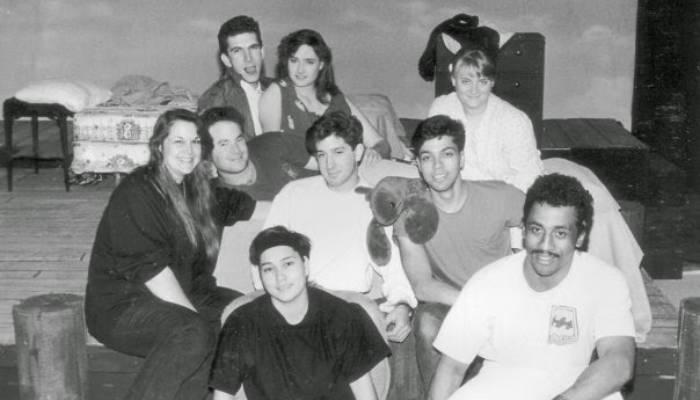
When I eventually felt the bug to return, and let's be honest, was there ever a doubt? I attended/audited an acting class in North Hollywood, and it took me a moment to get my bearings, but it wasn't until I watched an actor named Laura Katz did it click in. I wanted this in my life. It became an obsession. Everything I had learned in college was not being taught here, so I could envision how to build things, create soundscapes, staging, props, do makeup, and the training was so grounded in reality, the value of everything was enhanced. Within a couple of years, I was asked to start up the theater company, was given the keys to clean the theater, and had regular roles in the school's iconic long-running play. Running the theater took the place of training in class, and over the next decade or so, I went from show to show, was constantly writing and directing plays, and spent extra time making sure that everyone else in the school was involved. I started a one act workshop, took the school from a few performances a month all the way to performances every Friday, Saturday, and Sunday night with matinees during the day on Saturdays and Sundays. 

This was the decade - my 30s - that decided some of the sacrifices I'd make for art. I directed over 20 plays, wrote over 20, supported every production as the managing and technical director. One night, the cast had all left for a noisy bar where literally nobody could hear the person next to them, so I don't know what they ever got out of the experience. I was in the theater all alone - Studio 2 - and suddenly felt like I was in the presence of a relationship that was playing out its course. I stood in the middle and spoke out loud. "You and I have been through a lot together, huh?" I walked to different spots on stage, retracing where actors I worked with stood, thinking quietly about how many people I worked with over the years. This was a couple of years after we had our one and only theater company meeting to discuss the end of the one act series, and, unexpectedly, for my mentor to publicly give me thanks for growing the theater company. Actors in the audience whom I worked with cried when I was recognized. Some time after that, our founder took me aside and told me that I reminded him of the spirit and energy of the group theater in New York, where he studied. I stood there in the quiet theater thinking about all of this, and then I said, "Someday all of this will be over." I knew I was on the other side of the mountain, making my slow descent. 

I still had a handful of plays ahead of me, including an original musical and a final "flagship" production that used multimedia and made specific statements about identity and art. I made every prop. I created the poster. I rehearsed the actors in a museum, on my old college campus. The play almost didn't happen, facing a major issue when I had to fire and recast an actor. It was the last play I'd ever direct, and then after that I was done. I'd still act in a play for the next few years, but I was slowly cutting ties. The end of the play also coincided with a massive layoff at my day job, so it really felt like I was about to take a huge leap of faith, only part of it was voluntary. Thrust into a lifeboat made of severance with no theater to distract me, I attended some outplacement classes and then took a four day train trip across the country, where I met all kinds of people and saw the country through my camera. It was the time I needed to mourn the life that was, and imagine the life I wanted. I had nothing, and yet I still wouldn't settle for anything less than what this sacrifice called for. I said no to various jobs. I landed at Universal. 

For the next 14 years, I survived incredible resistance during my first few years before I hit a stride of incredible growth and opportunity. Any time I wanted to quit, someone was there to catch me. Anytime I suffered a setback, handfulls of people were there to gloat. At the height, I had live entertainment in four to five spots at the same time, and I had moments of thinking I'd retire there, even fantasizing about me taking a final street performer spot for a brief performance set. I thought for sure I'd at least get a sendoff, some kind of fanfare. I distinctly remember walking with one of my employees past the stage towards the control room, and the end whispered to me. I told her "I have walked this route thousands of times, often carrying ridiculous props, sometimes walking with talent, sometimes wading through a massive crowd. It never got old, but all of this is temporary. It all ends someday, so I'm grateful for every moment, even just walking back here with you." What she didn't know was that most of the time, I was solving impossible riddles of corporate politics, constantly finding a way to keep the musicians and my team safe. They figured that part out when, on my birthday in 2020, I was laid off at the height of the pandemic. 

This time I really had nothing. I thought it was all over. I couldn't go anywhere, I couldn't realistically look for work. I fantasized whether I'd be happy working somewhere not entertainment related, abandoning all of my momentum and experience. I didn't allow myself to believe in any outcome. I was an astronaut flying solo in a massive void, and I had no sense of ever returning to Earth. I started a three month process towards the end of 2021 interviewing for a job, and plan B was going to be pulling out some retirement money so I could focus on writing a book while I waited for industry opportunities to start warming up to post-pandemic normal. I didn't land that job, and in a three week turnaround from that rejection, I literally fell into a new position where I had to prove myself again, and it became my latest obsession. 

The moment I've had to pause, see where I've been, and imagine where I'm going, is always deeply personal. I've seen heightened life in those spaces, watched nerves give way to budding confidence, experienced risk making artists better. I feel myself wanting to protect any performance space I touch for as long as I can. I am always in that relationship longer than the space needs me. I feel it's necessary to acknowledge the end, to foresee it, to respect the chapter, no matter how long or short, because somehow, this quote is burned into the back of my mind:

"We cannot become what we want to be by remaining what we are." ~ Max de Pree

The goodbye is coming, and then I'll evolve again. Never be afraid of the outcome, or of change, or of being forced out of a position that fits me, that feeds me, that feels like home. In the end, home is what I carry with me, my values, my actions, my love, my experience. I may know every crack and every sound of the spaces where I've worked, lived unforgettable moments, and paid my dues in those spaces, but the things I seek are not exactly magical qualities attached to a job title or any sense of power or creative control. Home is a garden with fertile ground where I can plant seeds and cultivate growth for everyone. Home is the family I never had. 

Home is waiting for me. 


Monday, August 11, 2025

Learning to Stay


A very long time ago in my previous life in theatre, after a particularly emotional exercise in acting class, the founder of the school sat in the teacher’s position, his silhouette quietly taking in the scene in front of him, and turned his head sideways to us, talking to the ground but addressing all of us. “Actors are very special, very broken people. Nobody in their right minds would do this on purpose.” We all sat there, stunned, quiet even after class ended. My closest friend and actual neighbor at the time - long before the friendship was dramatically and maybe mercifully abandoned - and I didn’t speak about it on the way home or after. It was a truth that was unique to each of us, forcing us to reconcile whether or not we had a choice when we came to the school. Truth has a gravitational pull that is constant. 

Many years later it was still with me. I wrote on Twitter: 
None of us are artists because we choose to be. There are things we feel that refuse to hide in the quiet corners of the heart.
A friend - early in his career, before multiple Grammy awards - reposted that and it got a decent amount of attention. This resonated with a bunch of people, not because - and this is purely my theory about the psychology behind it - it addressed a feeling of being anointed as a struggling artist, but instead, I think it was because it asked the question about choice. Essentially, everyone has a choice of whether or not they want to pay attention to their feelings and try to capture them in some kind of medium that we can manifest and see what they're feeling on canvas, a lyric, a dance movement, in a digital world. What you're reading is a manifestation of my need to express, so obviously, I made the choice. What's the other option? Suppression. Denial. Sometimes quiet suffering with just enough distraction will keep you busy from one day to the next, burying unwanted feelings deep, just waiting for an opportunity to resurface at a time when it’s literally the opposite of convenient. 

The arts are as volatile as they are revolutionary, and the collateral damage of keeping all of those emotions barely checked is that they need someplace to go. Every emotion,  just like every chord progression or story, needs a resolution. Anything that plays out in spite of that resolution, like a square wheel on a car, will break and ruin everything around it sooner or later. The highs of emotions, the chaotic chemistry of other creatives, the poison of social media algorithms, and the predatory nature of many non-creatives in the business, all contribute to just wanting the noise to stop so that something real can matter

My first panic attack came after some heavy weeks of cricitism, confrontation, then an emotional sucker punch from a relative blind spot. It incubated, cooked inside me, and late at night when scrolling through social media feeds, one influencer was doing a skit about her thoughts on people from LA visiting, and said "...everyone in LA just wants to be famous." I tried scrolling past, then I went back and to the comments. I wrote, "no, everyone here is just trying to pay their bills." Erased. I wrote, "Fame? Fame is the last thing most of us need!" Erased. I didn't realize my heart was pounding. I wrote, more slowly this time, "Everyone...I know...is struggling." And with that, my chest started tightening up, twisting into a small tornado, and I felt like I couldn't breathe. Going for that ride, I flexed my hands to see if I could feel them, I was completely worried I was having a heart attack or some other kind of physical issue. It felt like ALL of the blood rushed out of me. I kept thinking "breathe, breathe, breathe" and slowly sat up, stared around my bedroom, and it occurred to me that I didn't want to die with my apartment such a mess. Give me a chance to clean up, at least. Once I sat there long enough, now in a cold sweat, and came back to myself with calmer breathing, I looked up and told my parents, "I know I miss you and everything, but I'm not ready yet." I went back to the social post, deleted the unfinished comment, then blocked the creator. I closed out of the app, then signed up for therapy. I filled out the questionnaire, decided to spend whatever it asked for, then tried to go to sleep. 

The eight months that followed with my therapist, not only was I entertained and relieved by the recurring expression of confusion as she heard about my job, but I actually did a good deal of unpacking in the dusty corner of my brain’s attic. I had new perspective on my parents and their struggles at my age. I thought and wrote about past relationships. I thought about death. And life. And separation. And abandonment. I only knew for sure that I wasn’t imagining things. I might have misjudged the size of my problems, but I wasn’t wrong about them being there. I just wanted to get back to doing the things that always made me happy. 

Isn’t this supposed to be about entertainment? Why are we talking about mental health? Is this an intervention? Easy now. I’ll come back around to it.

In my dramatic youth, absolutely everything was high stakes and impulsive, and my friends and I had our dramatic episodes that felt scripted for coming of age sitcoms. I swear, sometimes I could barely hear the narration faintly guiding the pauses: “Don’t worry about me! I know what I’m doing!” (“He did not, in fact, know what he was doing.”) When I passed through music classes in college to English, then to Theatre, I encountered a lot of people who were more engaged with their emotions, their actions, than the average person. People were slowly evolving to the habit of presenting an interesting, maybe even enviable, life on social media that had nothing to do with the reality of their day-to-day. Music had the greatest curve, the divide between people who used music as a language and people who learned it as a skill. Theater, on the other hand, invited all of us to exercise keeping emotions just barely under the surface, and for almost two decades, I learned how to use playwriting as a handhold while everyone else around me swarmed and fed like white blood cells racing in multiple directions through a blood stream. I met and navigated so many different personalities, many of whom I saw as cautionary tales, because they seemed to not worry about consequences, only fame, popularity, and opportunity. One in particular was as volatile as she was sweet, and used my apartment as her safe space. Things were always cozy and quiet until the world caught up to her, and her breakdowns on my couch, at my front door, in the middle of the night, were as exhausting as they were difficult to contain. At one point, her problems became too loud and complex for me to handle, so I shut down. It was too much. 

About three to four years later, I found out she died. Her mother was trying to find someone who knew her daughter - really knew her - and after a brief conversation, she confided in me that the poor girl had ended her life after receiving a letter from her step mom, a cruel manipulation that was the last push she needed after an incredibly difficult public life in the years after I knew her. She was already gone two years when I got the news. I went through the hurt, the anger, the guilt, the frustration. I carried that unresolved sadness trying to understand it for months. I read books. I did a little ceremony for her at the beach. I even bought a ring that reminded me of her and her absence. Nothing placed it where it naturally felt like it needed to be. It took at least a hundred replays of one song, Sara Bareilles’s Gravity, to finally let a truth sink in. Her suffering was done. My suffering kept her trauma alive. I had to let it go and find a different way to look at it.  Once I found that, I discovered a greater truth. We’re all one letter away from losing everything. 

That even feels weird to write, so I can only imagine how it feels to read. 

We’re all one letter away from losing everything. 

I thought for years about what it would feel like to lose a parent. Both of my parents were in assisted living with Alzheimer’s, and I was able to see them once a year, so the changes were drastic. I got so many calls about the latest development that I stopped thinking about what I could break or throw or do when the news actually came. I thought my world was going to end completely, but both times, I heard the final confirmation from my sister and sat there stunned, paused in existence, as if I had just drank something that didn’t taste right, and I genuinely had to wait for a side effect to let me know if it was going to kill me. With both of them, I sat on my couch and stared into the distance until I realized that hours had passed, and I had to get something to eat. I put on my favorite podcast and took a walk, picked up fast food, ate it without even knowing I was eating, then slowly picked up functional pieces of my life. All of the terrible things that happened to me after both of them died could have ended me. They could have been that letter. The coworker who shook my hand and shared condolences for my dad’s death while offering to do the one thing that brought me joy was a sucker punch that could have done it. The losing of my job less than a year after losing my mom passed could have - especially during COVID - been a great opportunity to check out of this story and close the book. 

I don’t know what to tell you about what kept me here, without even a hint of self-harm or abandonment. The number of difficulties, betrayals, and people dead set on a direct and disproportionate amount of hurt aimed at me have all been enough ammunition to inspire me to dive head first into the darkness, but I’ve developed a small, consistent light of hope inside that gets me up in the morning for another day of curiously finding out what lies ahead. I have gone through whole episodes of life completely alone and in anguish - my sacrifice for an undistracted life in art - and I feel like I still have something to contribute to the experience. Regardless of the weight I carry on any given day, the second I meet someone in a space where they need a sounding board or want to figure some things out, I get rebooted for the moment and find joy in the selfless existence in their world. If that person is creative, that is a language I love and crave, and instantly my life regains color and purpose, but also urgency for the very simple reason that I know their insecurities are sitting just under a transparent layer. All too often they’re living life on a tipping point, carefully balancing looking normal like an artistic badass with a restlessness of wanting everything to stop, or wondering when it’s just going to do that on its own. 

I see them as I see you, and my instincts understand your value in a way that you might not see yet. I constantly balance the light and dark and talk to my parents out loud about it, waiting for the intermittent creative inspiration to pick me up and take me to a new place. The urgency of saying what you need to say, to reach people, to make every artist regardless of their resume feel heard and felt and understood, is undervalued for want of all of the noise that nobody really has a good grip on. Nobody has all of the answers, but the important thing to keep in mind is that everything matters, and the unknown obscures a far larger part of the map than the sum of your life experience dictates. You can make the edge of the known world as immediate as you choose, but don’t jump quite yet. The skill for curiosity, discovery, exercising that muscle to learn, abandon, and trust is all part of the same muscle group. Doing all of that through the arts means you get to share your milestones, your journey, the heroic tales of you vaulting over obstacles or going through them. 

I wish my friend was still here, and that she could have found the happiness others wanted to deny her. I wish I had just a little more patience and maturity at the time to keep her safe place intact. It’s okay to be broken, which can be beautiful at times, because it makes you even more unique and a testament to the path you’ve chosen...and the things you've survived. 

“The world breaks everyone, and afterward, many are strong at the broken places.”  ~ Ernest Hemingway 

Tuesday, August 5, 2025

I Am a Link In a Chain


Imagine yourself as a constant traveller, consistently arriving, meeting new people, working on something intensely together, then moving on. It's a habit, a way of life, an absolute weird existence full of emotional highs and lows, and lots of private thankless moments where you, the hero of the story, are given a completely justifiable opportunity to quit. You're Luke Skywalker, Rocky Balboa, Atticus Finch. You're Pee Wee Herman. You can travel with one of two things: Either an ornate weapon never used in battle, or a bag of tools. What's the theme music that plays when you choose? 

I am fully and wholeheartedly the product of bullying. Grade school was a series of recurring vignettes, with Catholic cautionary tales and ghost stories, a group of tormentors who used summer vacations to dreamed of coming back to make each year more miserable for me than the last, and a couple of best friends slowly lured away by drugs and petty crimes. Eight years not only took a toll on me with the random sucker punches I never expected, a few years of pop warner football toughened me up a little on the outside, making the random punching and tripping land much softer. The last bit of the bullying that happened in that era was punctuated late in 8th grade with a single punch across Peter Farrell's mouth, cutting the inside of his mouth against his braces. That was the last thing I cared about. I didn't even go to my grade school graduation. 

After I picked up a guitar, I fell deep into a basement of self-expression, writing songs, poems, eventually plays, and I found myself uniquely aware of the experiences other artists had. I saw the ones with egos and fame, with expectations and hype, I saw the ones with hope and talent, and nobody in their corner. I didn't know what to do for them, or if I was even a person who could do something, anything. I got published in a few anthologies, played in garage bands, and started stage managing plays until Tom Vitorino gave me a producer credit on a play. Whatever bullying ever took away from me, I filled the void with hard work and an obsession with creating just about anything. Props, sets, writing plays, rehearsing and figuring things out, it all took the place of relationships or any kind of a social life. Hanging out the way I did in high school and early college just felt boring, like a waste of time. Spending whole weekends in the theater rehearsing, or playing with a band in my living room, that felt real. It was community. It wasn't about me. It was about us. Nobody on the outside understood. 

I still found bullies in the world, free range jerks seeking to control and establish a power structure in an office. On my last day working at an auto insurance company, I worked with the execs to secretly set up a massive layoff, and then at the very last minute, they walked me into the conference room to pick up a fat severance check, followed by an escort off premises. As I walked out to my car, the most hated of those execs waved to me as an employee, sobbing and catching her breath, loaded up her little hatchback with boxes of personal items and plants. She yelled "Bye! Thanks!" in a sing-songy voice, and I glanced back at the prison walls. The next time I'd visit there on a whim, there were only a few left in the building, all wondering when their time would come. 

The next place I landed at, there were a few sharks in the ocean, and I had a ton of support, but somehow I was even more isolated while standing out in the midst of thousands of employees. The corporate world has voids and blind spots, many places to build amazing things you'll learn to abandon. It's fantastically effective basic training to exercise the muscles required to execute and appreciate sand castles, because in the grand scheme, everything we do on stage is temporary, isn't it? People will care intensely, and then at the end of the night, we all go home. Repeat that a couple thousand times, you'll find yourself at a desk in an office with your history around you and an email inbox bubbling like a bottomless cauldron. 

You have a completely justifiable opportunity to quit. People will want you to quit. People will help you quit. They will see your bag of tools and assume they can pick them up in your absence, and nobody will know the difference. Bring on the music. 

Let's stay in the fight together. Sometimes it takes 30 years to become an overnight success, but it only happens when you take it one show at a time. There's only one place to go from here....